



Yes. Paris Dental in Murrieta evaluates jaw pain, teeth grinding, and sleep-related concerns, offering custom night guards and conservative TMJ care. Treatment starts with an examination to find the cause of your symptoms. Call (951) 577-8090 to book an evaluation.
Care built around you
Jaw pain, clicking, morning headaches, and restless sleep are easy to dismiss — until they start shaping your days. At Paris Dental in Murrieta, TMJ and sleep-related dental care begins with careful diagnosis, because jaw joint problems and sleep-disordered breathing share symptoms but need different treatment. Dr. Noorullah Azim, DDS, evaluates the joint, the bite, the airway, and your sleep history together before recommending anything.
You do not need to live with a sore jaw or exhausted mornings as a normal part of life. Many of these conditions respond well to conservative dental treatment, and the first step is simply an examination that takes your symptoms seriously.
Is this the right care for me?
- Jaw pain, tenderness, or aching around the ear
- Clicking, popping, or locking when you open your mouth
- Morning headaches or a sore jaw on waking
- Teeth that look worn, flattened, or chipped
- Loud snoring or gasping during sleep
- Daytime fatigue despite a full night in bed
- A partner who notices grinding or pauses in your breathing
Understanding TMJ disorders
The temporomandibular joint connects your jaw to your skull on each side of your face, and it is one of the most used joints in the body. TMJ disorders describe problems with that joint, the chewing muscles, or both. Pain is the most common complaint, but stiffness, limited opening, locking, and ringing in the ears can all be part of the picture.
Causes vary. Nighttime grinding and clenching overload the joint. A misaligned bite concentrates force unevenly. Arthritis can affect the joint as it does others. Injury, whiplash, and sustained muscle tension from stress all play a role. Because the symptoms overlap, treatment that helps one cause can miss another — which is why diagnosis comes before any appliance or therapy is recommended.
Conservative care comes first in most cases: habit awareness, jaw rest, heat or cold, and a properly fitted oral appliance. More involved treatment is considered only when conservative measures do not resolve the problem, and referrals are recommended when specialist care is appropriate.
Night guards for grinding and clenching
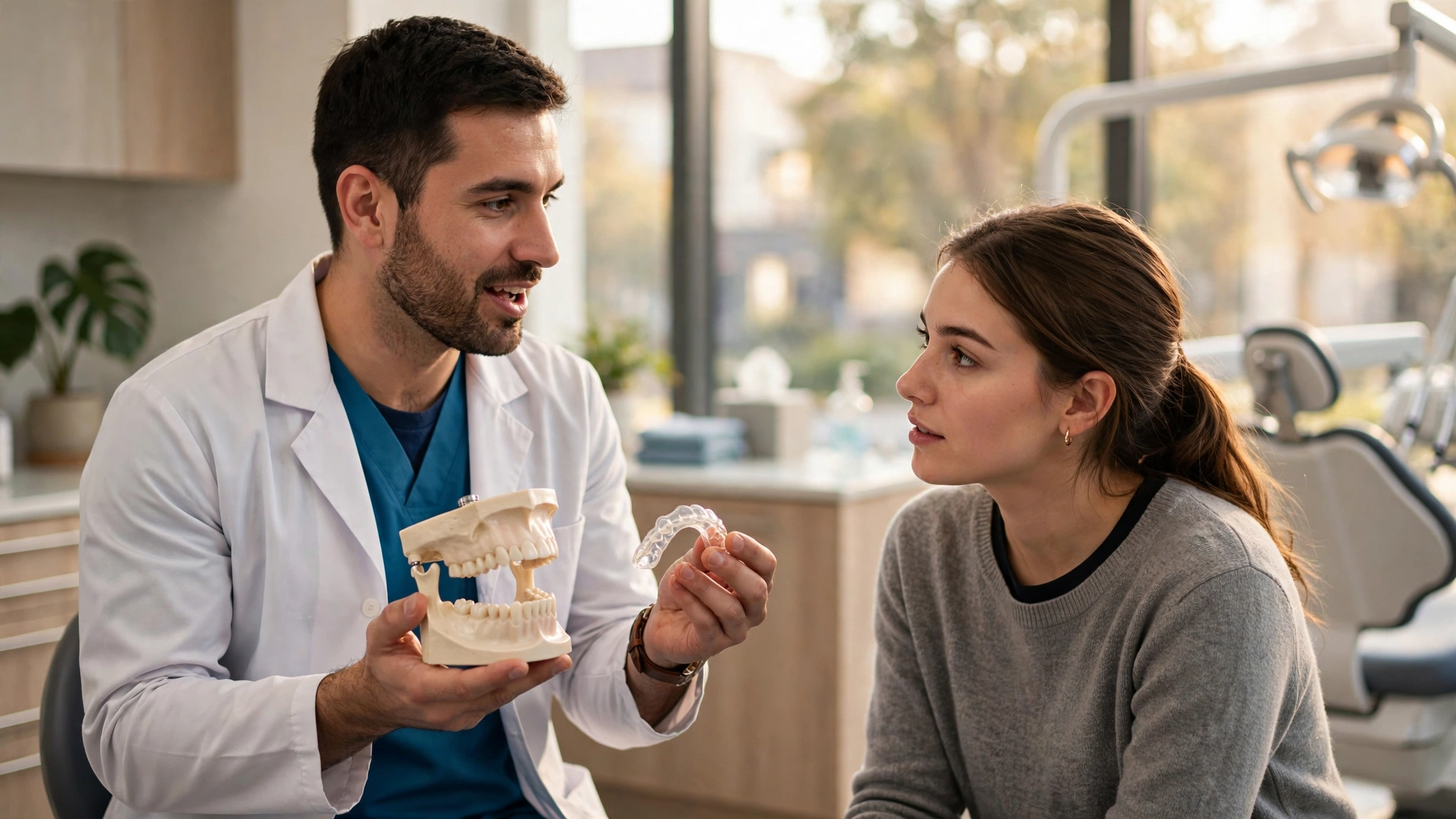
Teeth grinding, called bruxism, is remarkably common and usually happens during sleep, so most people do not know they do it. Over time, grinding wears enamel, cracks fillings, loosens crowns, and strains the jaw joint. A custom night guard is a thin, precisely fitted appliance worn over the upper or lower teeth at night. It cushions the bite forces, protects dental work, and often eases morning jaw soreness within weeks.
Custom guards differ meaningfully from store-bought versions. They are fabricated from impressions of your teeth, so they fit securely without bulk, stay in place all night, and distribute pressure evenly across the arch. An ill-fitting guard can shift the bite or irritate the gums, which is why the fit is checked and adjusted at a follow-up visit after delivery.
Sleep apnea, snoring, and oral appliances
Obstructive sleep apnea occurs when the airway repeatedly narrows or closes during sleep, briefly interrupting breathing dozens or hundreds of times a night. Beyond loud snoring and daytime fatigue, untreated apnea is associated with elevated cardiovascular risk, which is why persistent symptoms deserve proper evaluation.
Diagnosis of sleep apnea requires an overnight sleep study, which is ordered through a physician — a dental office does not diagnose the condition on its own. For mild to moderate obstructive sleep apnea, or for primary snoring, a custom oral appliance worn at night gently holds the lower jaw forward, keeping the airway open. Many patients tolerate these appliances far better than CPAP machines, though CPAP remains the standard for severe cases.
If your symptoms suggest significant apnea, we refer you for a sleep study first and coordinate with your physician afterward. Oral appliance therapy then proceeds with the medical diagnosis in hand.
How diagnosis works
Evaluation starts with your story: when symptoms began, what makes them better or worse, and how your sleep actually feels. The examination covers jaw movement and joint sounds, muscle tenderness, bite alignment, tooth wear patterns, and airway indicators. Imaging data — such as a panoramic x-ray or 3D scan — is used when appropriate to look at joint structure and rule out other causes.
This unhurried workup matters because jaw pain is not always a jaw problem. Sinus issues, ear conditions, and nerve pain can mimic TMJ symptoms. A diagnosis made after an examination and appropriate imaging leads to treatment aimed at the real cause.
Living with treatment: what to expect
TMJ and sleep appliance therapy is a process, not a single appointment. After your appliance is delivered, a follow-up visit checks the fit, the bite, and how your jaw feels in the morning. Small adjustments are normal — the appliance is refined until it is comfortable enough to wear every night, because consistency is what produces results.
You will also be asked about habit changes that support treatment: avoiding hard or chewy foods during flare-ups, noticing daytime clenching, managing stress that feeds muscle tension, and keeping a simple note of headache or pain frequency. This feedback helps Dr. Azim judge whether the current approach is working or needs to change. Most patients notice gradual improvement over the first weeks, with continued gains as the jaw and muscles adapt.
Your visit
We begin with your health history, concerns, and an examination. Dr. Azim explains the findings, appropriate options, expected visits, and estimated costs before treatment begins. If an appliance is recommended, impressions or digital scans are taken and the device is fitted and adjusted at a follow-up visit. Timing and suitability depend on your examination. Referrals are recommended when specialist care is appropriate.
Plan with confidence
Ask for a written treatment estimate and confirm insurance benefits or membership eligibility before proceeding. Explore payment options or request an appointment.
Call (951) 577-8090 or visit Paris Dental at 24837 Jefferson Ave, Suite 206, Murrieta, CA 92562.
Keep exploring
- Restorative Dentistry — repair worn or damaged teeth, including bite-related wear
- Teeth Cleaning & Exams — regular checkups that catch grinding damage early
- General Dentistry — everyday care for the whole family