


Yes. Paris Dental in Murrieta provides full and partial dentures, plus implant-supported options for extra stability. Your dentures are designed around your bite, speech, and appearance after a full evaluation. Call (951) 577-8090 to explore your options.
Care built around you
Missing teeth affect how you eat, speak, and feel about your smile — and you do not have to simply accept it. Dentures and partial dentures remain a proven, non-surgical way to restore a complete smile. At Paris Dental in Murrieta, Dr. Noorullah Azim designs every prosthesis around your mouth, your bite, and your daily life, and recommends treatment only after an examination and appropriate imaging.
Is this the right care for me?
- You are missing several teeth or a full arch
- Your remaining teeth cannot support a bridge or crowns
- You want tooth replacement without surgery
- Your current dentures fit poorly, look worn, or cause sores
- You want to understand all options, including implant-supported choices, before deciding
Full dentures and partial dentures in Murrieta
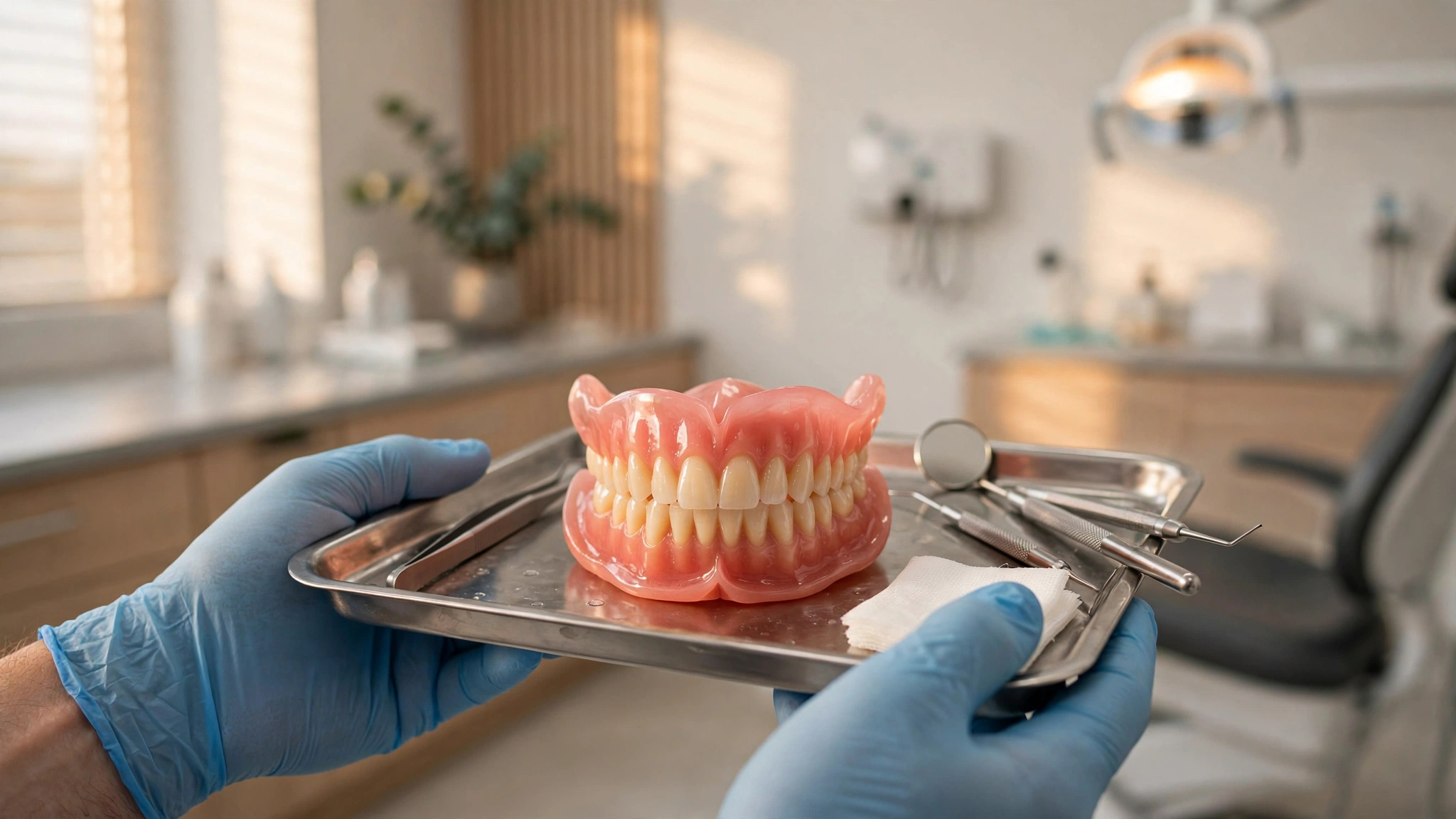
A full denture replaces all the teeth in an upper or lower arch, resting on the gums with natural suction and muscle control holding it in place. A partial denture fills the gaps when some natural teeth remain, clipping discreetly to them for stability. Both are custom-made: the shape, shade, and arrangement of the teeth are chosen with you, not for you.
The ideal prosthesis is the one that fits your mouth as it is today. That is why we start with precise impressions or digital scans and a careful bite registration. Small details — how your lips close, how you speak, how the denture looks when you smile — are checked at try-in appointments before anything is finalized. A denture made carefully feels like a part of you; one made hastily rarely does.
Partial dentures deserve special mention because they protect what you still have. By filling open spaces, a partial keeps neighboring teeth from drifting and preserves your bite. The clasps are designed to be as discreet as modern materials allow, and the base is shaped to your gums for comfort through the day.
Your visit: impressions, fittings, and adjustments
We begin with your health history, concerns, and an examination. Dr. Azim explains the findings, appropriate options, expected visits, and estimated costs before treatment begins. For dentures, this includes which teeth, if any, need to come out first and how the healing timeline affects denture fabrication. Timing and suitability depend on your examination.
Expect several visits: records and impressions, a wax try-in where you preview the look and feel, delivery day, and follow-up adjustments. The try-in step is your chance to speak up about anything — tooth shape, fullness of the smile, how your voice sounds. Changes are easy at that stage and difficult later, so we encourage honest feedback.
Living with dentures: fit, care, and follow-up
New dentures feel foreign at first — that is normal, not a sign of failure. Most patients adapt within a few weeks as cheek muscles learn the new contours. Start with softer foods cut small, practice speaking aloud, and give yourself grace during the adjustment period.
Daily care is simple but non-negotiable: remove dentures at night, brush them with a soft denture brush, and soak them as directed. Your gums need rest, and your mouth needs the chance to breathe. Never sleep in a denture unless we specifically advise it, and never attempt home repairs or adjustments — both risk damage that turns a simple fix into a remake.
Your mouth changes over time as gums and bone gradually reshape, which is why dentures need periodic relines to maintain fit. Sore spots, slipping, or clicking sounds are signals to come in, not to endure. A quick chairside adjustment usually restores comfort, and there is a small but real risk in ignoring fit problems: chronic irritation can injure the tissue underneath.
Daily denture care: protecting your investment
A denture is a precision prosthesis, and daily habits determine how long it serves you well. Each evening, remove your dentures and brush every surface with a soft denture brush — not regular toothpaste, which is abrasive enough to scratch the acrylic over time. Soak them overnight in water or a denture cleanser as directed; this keeps their shape and gives your gums essential rest.
Clean your mouth too. Brush your gums, tongue, and palate gently each morning before inserting your dentures — this stimulates circulation and removes the plaque that causes irritation and odor. If you wear a partial denture, pay extra attention to the natural teeth it clasps: they do extra work and need thorough brushing and flossing to stay healthy.
Handle dentures over a folded towel or a basin of water. They are stronger than they look but can crack if dropped on a hard sink — and a broken denture often means days without teeth while it is repaired or remade. Rinse after meals when you can; food trapped underneath is the most common cause of sore spots.
Bring your dentures to every dental visit, even if nothing feels wrong. We check the fit, the bite, and the condition of the base. Small problems caught early stay small, and regular review is how a denture keeps serving you comfortably for years.
Considering implant-supported dentures
Some patients want the stability of implants with the coverage of a denture. Implant-supported dentures snap onto a small number of implants, dramatically improving retention — especially for lower dentures, which are notoriously the hardest to keep stable. This is a bigger commitment involving surgery and healing time, and candidacy is determined after an examination and appropriate imaging.
The surgical phase is planned with the same care as any implant treatment: examination, imaging, and a written sequence before anything begins. After the implants integrate over several months of healing, the denture is fabricated to snap onto them with precision attachments. The result still comes out for cleaning, but day to day it feels planted. Chewing power improves markedly, and many patients report that the constant low-level worry about slipping simply disappears.
If the idea appeals to you, we will walk through both paths side by side: conventional dentures now, or staged implant treatment over time. There is no pressure either way — the right answer is the one that fits your health, timeline, and budget.
Plan with confidence
Ask for a written treatment estimate and confirm insurance benefits or membership eligibility before proceeding. Most PPO plans are accepted, and many include a denture benefit our team will verify for you. Explore payment options or request an appointment. Paris Dental is located at 24837 Jefferson Ave, Suite 206, Murrieta, CA 92562 — call (951) 577-8090 to discuss your options.